
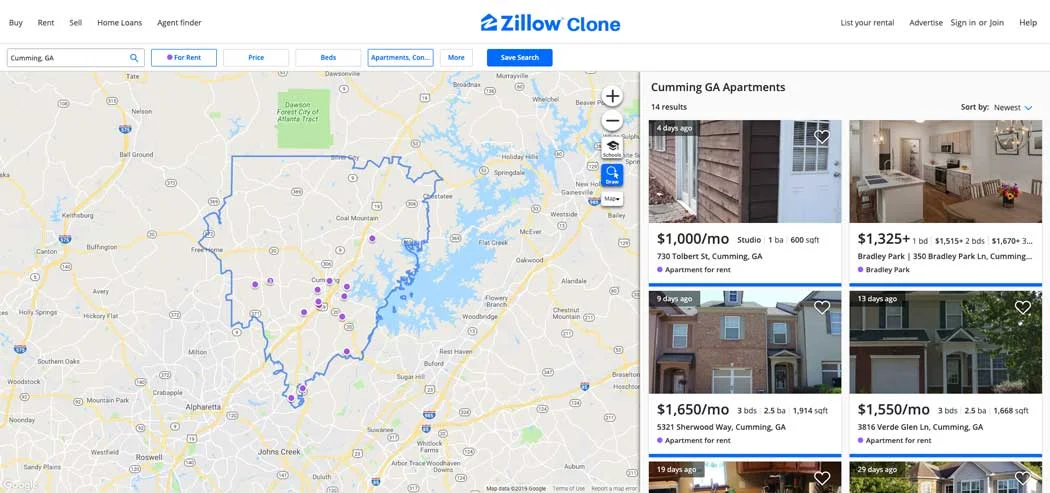
Building a Zillow clone is an ambitious project that requires careful planning, solid technical knowledge, and understanding of the real estate market. Zillow Clone is one of the leading real estate platforms, known for its user-friendly design, property listings, and price estimates. If you’re looking to build a similar platform, this article breaks down the necessary steps, technologies, estimated costs, and development timelines to create a Zillow clone.
What is a Zillow Clone?
A Zillow clone is a platform that mimics the core features of Zillow, such as property listings, home price estimates (Zestimate), user accounts, and search functionalities. The aim is to provide an online marketplace for real estate, where buyers, sellers, and renters can browse listings, get property valuations, and interact with agents.
Core Features to Include
When building a Zillow clone, the following core features are essential:
- User Registration and Profiles: Allow users to create accounts and save their preferences. This will enable them to track properties, save searches, and receive personalized recommendations.
- Property Listings: A searchable database of properties with detailed information, including photos, videos, floor plans, and property descriptions.
- Price Estimates (Zestimate): One of Zillow’s most popular features is its home valuation tool. You’ll need to develop a system to estimate property prices based on various data points, such as location, size, amenities, and market trends.
- Search Functionality: Users should be able to filter property listings based on various parameters, such as price, size, location, type of property, and more.
- Interactive Maps: Integrating Google Maps or another mapping service allows users to explore properties in a specific geographic area.
- User Reviews and Ratings: Buyers, sellers, and renters should be able to leave reviews and ratings for properties and agents, which builds trust within the platform.
- Property Comparison: A feature that allows users to compare multiple properties based on different criteria like price, features, and size.
- Mortgage Calculators: Include mortgage calculators so that users can estimate their monthly payments based on property prices and down payments.
- Admin Dashboard: An admin dashboard to manage listings, users, and track the performance of the platform.
Technology Stack for Building a Zillow Clone
The tech stack for developing a Zillow clone involves several components, including front-end, back-end, and database management. Here’s an overview of the technologies commonly used for such platforms:
1. Front-End Development
- HTML/CSS/JavaScript: Standard for building the layout and user interface of the website.
- React or Angular: Popular JavaScript libraries/frameworks for creating dynamic, interactive UIs.
- Bootstrap: A responsive framework that speeds up front-end development.
2. Back-End Development
- Node.js: A JavaScript runtime for building scalable server-side applications.
- Python (Django/Flask): Python frameworks like Django or Flask are commonly used to build back-end logic, especially for data-intensive applications like real estate platforms.
- Ruby on Rails: Another back-end framework that simplifies web application development.
3. Database
- PostgreSQL or MySQL: Relational databases are excellent choices for storing user data, property listings, and transaction records.
- MongoDB: For large-scale, unstructured data storage, MongoDB could be used, especially if you have a need for flexibility in schema design.
4. Cloud Hosting
- AWS (Amazon Web Services) or Google Cloud Platform: These platforms offer the infrastructure needed to scale your website, store large volumes of data, and ensure high availability.
5. Geolocation Services
- Google Maps API: Essential for integrating location-based search features and displaying property locations on a map.
6. Payment Gateway Integration
- Stripe or Razorpay: If you plan to include payment functionalities (e.g., for premium listings or booking services), you’ll need a secure payment gateway.
7. AI/ML for Price Estimation
- Machine Learning Algorithms: Developing accurate price estimation features (like Zestimate) will require machine learning models. You can use Python-based libraries like Scikit-learn or TensorFlow to implement predictive models based on real-time data.
What is the Zillow Clone App ?
A Zillow clone app is a real estate platform designed to replicate the core features of Zillow, one of the most popular real estate websites. Just like Zillow, a Zillow clone app allows users to browse property listings, search for homes, apartments, and commercial spaces, and access detailed property information, including photos, descriptions, and pricing. It typically includes features like user accounts for saving favorites, property comparisons, and notifications about new listings.
One of the most crucial features of a Zillow clone is the price estimation tool—similar to Zillow’s famous “Zestimate.” This feature provides an estimated market value for properties based on a variety of factors such as location, property size, and market trends.
Additionally, a Zillow clone app can integrate interactive maps to help users view property locations and search for listings within a specific geographic area. It can also support reviews and ratings from users, enabling them to leave feedback on properties or real estate agents.
Essentially, a Zillow clone app is built to provide a similar user experience, helping buyers, sellers, and renters navigate the real estate market. It offers features for property discovery, market insights, and connecting with agents or owners, all in one mobile or web platform.
Cost of Building a Zillow Clone
The cost of building a Zillow clone can vary widely depending on factors like features, complexity, development team, and technology choices. Here’s an estimated breakdown:
1. Basic Version
- Cost: $15,000 – $30,000
- A basic Zillow clone will include essential features like property listings, user registration, search functionality, and an admin dashboard. The platform will not have advanced features like price estimation algorithms, reviews, or complex map integration.
2. Intermediate Version
- Cost: $30,000 – $50,000
- This version will include most of the features mentioned, such as interactive maps, property comparisons, mortgage calculators, and more. It may also include basic AI for price estimates but not as advanced as Zillow’s proprietary algorithms.
3. Advanced Version
- Cost: $50,000 – $100,000+
- The advanced version will include all the core features plus AI-based price estimates, full-scale integration with third-party services (like real estate agents, lenders), and a robust back-end infrastructure. Additionally, it may have mobile apps, premium property listings, and advanced user engagement tools.
Time to Build a Zillow Clone
Building a Zillow clone depends on the complexity of the project and the number of features you want to implement. Here’s a rough timeline:
1. Basic Version:
- Time: 3-4 months
- A simple platform with basic features and minimal AI or advanced functionalities.
2. Intermediate Version:
- Time: 5-7 months
- A more polished version with additional features like advanced search filters, better UI/UX, and some AI features.
3. Advanced Version:
- Time: 8-12 months
- This version would take the longest to develop, with robust back-end infrastructure, machine learning integration for price estimates, and multiple platforms (e.g., web and mobile).
Conclusion
Building a Zillow clone is a substantial investment in terms of time, effort, and cost, but it can pay off if executed well. By incorporating the right technology stack, building scalable back-end infrastructure, and ensuring the platform has all the necessary real estate features, you can create a valuable asset in the real estate market. Whether you’re launching a simple MVP or a fully-featured platform, understanding the core technologies, costs, and timelines will help you make informed decisions about how to proceed.
Are you ready to dive into the world of real estate tech? Let’s start building!